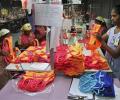
'Till now, we were under tremendous stress. The economy was not recovering, the financial cycle was not moving and the banks were not supporting.' 'With the government pumping in money to the banks and asking the NBFCs to give priority to the MSME sector, there will be a revival.'

Exuding confidence in sustaining the tempo of credit growth, public sector bankers said on Wednesday that consolidation in the public sector bank (PSB) space has given them a robust base to scale. The privatisation of PSBs can be done through divestment of government stake to a wider base of investors without haste. There is nothing to worry about at this point (high credit offtake) as underwriting standards and risk management are much better.

While the Narendra Modi government has stuck to its stand that pending payment is Rs 12,343 crore, MSMEs calim outstanding amount is Rs 2-3 trillion. Moreover, MSME ministry's SAMADHAN portal has been of little help.

India's unabated tryst with Russian crude oil is slowly coming to an end. The time has come for Indian refiners to navigate, creatively, the choppy waters of the post-honeymoon period, and for Indian policymakers to take cognisance of the broader impact on India from the spillover of the Russian crisis - after Washington's warning to transgressors last week. Shipments from Russia to India have averaged over 1.8 million barrels a day since February, according to data from Paris-based market analytics firm Kpler. But much of the crude shipped to India was non-sanctioned because it traded below a price cap set by the US led G-7 nations in December.
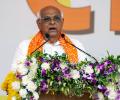
Patel was administered the oath as the 18th chief minister by Governor Acharya Devvrat at a function held at the Helipad Ground near the new Secretariat.

The Department for Promotion of Industry and Internal Trade (DPIIT) will soon start public consultation for a national retail trade policy, which is likely to include an insurance scheme aimed at providing financial protection against losses caused by theft, accidents or natural calamities. The policy will also spell out ways to give traders access to low-cost finance, promote digital inclusion, and create necessary infrastructure to support them, a senior government official told Business Standard. This is expected to offer relief especially to traditional traders, who are facing stiff competition from large e-commerce players.

The earliest ones included whistles shaped like birds, toy monkeys that could slide down a string and small carts made from materials found in nature such as sticks, clay and rocks. While there might be no disputing India's rich toy-making tradition, the industry is languishing for lack of investment and technology, and also owing to competition from cheap imports. And though it has been listed among 24 key sectors under the government's Atmanirbhar Bharat Abhiyaan, the question remains: will this push help place it in the global game? Currently, 80-odd per cent of the toys sold in India are imported - nearly 60 per cent of them from China.

Subsidies have been stopped for several manufacturers that are under investigation for alleged violations of local-sourcing rules.

'If you pay Rs 1,000, you get a special queue.' 'If you pay Rs 500, there will be another shorter queue.' 'There will be a separate queue for Rs 300.' 'Is this the way you give vaccine to the people?'

The words 'industry', 'industrial development', 'jobs', and 'employment' have been ringing with higher frequency since Mamata Banerjee stepped into her third term with landslide victory after a high-octane election last year. "Our government's next target is industrial development," the chief minister (CM) had been heard stating at different public meetings in the past few months - perhaps setting the tone for the sixth edition of the Bengal Global Business Summit (BGBS) slated for later this month. Investor summits by any state are about intent, big numbers, and tall claims. Yet in competitive federalism, its importance as a marketing tool is undeniable.

Finance Minister Nirmala Sitharaman on Monday said the government is planning to extend the suspension of fresh insolvency proceedings for another three months, a move which will provide major relief to corporate borrowers hit by the coronavirus pandemic. Addressing the Bangalore Chamber Of Industry And Commerce (BCIC), she said the government has taken several measures, including deferment of tax payment date, to help businesses and people.
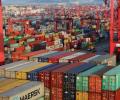
Exporters on Thursday demanded fiscal incentives, tweaking in customs duties on certain products and credit at affordable rates in the forthcoming Budget to boost exports and create jobs. In a pre-budget virtual meeting with Finance Minister Nirmala Sitharaman, the Federation of Indian Export Organisations (FIEO) said the depreciation of the rupee against the US dollar is affecting exports' competitiveness and the sector requires more support. "Creation of employment is the biggest challenge faced by the country...We would urge the government to provide fiscal support to units which provide additional employment in the export sector," the exporter's body said.
ITC has been one of the best performing large-cap stock at the bourses thus far in calendar year 2022 (CY22), rallying nearly 52 per cent during this period and outperforming the sector benchmark - the S&P BSE FMCG index - by a wide margin that moved up around 17 per cent during this period. However, the counter has lost over 5 per cent from its recent high of Rs 346.25 hit on September 23, 2022 and has underperformed the S&P BSE Sensex, which has lost nearly 2 per cent since then. So, is the rally in the stock coming to an end, and is this a good time to book profit?

Air India Chairman Rajiv Bansal has been appointed as the new aviation secretary as part of a major top-level bureaucratic reshuffle effected by the Centre on Wednesday. K Rajaraman, additional secretary in the department of economic affairs, has been appointed as secretary, department of telecommunications, a personnel ministry order said.
Demonetisation and GST are the main reasons for the job losses.

Gadkari said that the MSME sector contributes significantly in pushing the country's economic growth and creating employment.

India has a huge untapped population which doesn't have facilities for financial aid and insurance, and it is perhaps plausible to look at the option of having niche players catering to smaller sectors akin to non-banks and microfinance institutions in lending, said Rakesh Joshi, member (Finance & Investment), Insurance Regulatory and Development Authority of India (Irdai). Speaking at the Business Standard BFSI Insight Summit, Joshi said, "Today, most of our insurance companies operate at a national level. There is arguably a case for having differentiated operations, which cater to niche sectors the same way we have non-banking financial companies (NBFC) and microfinance institutions in lending." "The capital requirement for niche players may not be as large as those having national ambitions. "Enabling these niche players, which require lower capital, will enhance the penetration in areas which hitherto had not seen traction from large players," he said.

The difference between what the banks play in the US and India is not that of soccer and football but rugby and football. SVB also has a unique character. But when risks are mispriced, the fallout could be very similar, points out Tamal Bandyopadhyay.

They say that a stimulus package may not be necessary because, unlike last year's total lockdown, public transport, including the railways and airlines, is running and the restrictions on movement are localised and, in some cases, are partial rather than total.

The bamboo water bottle is priced at Rs 560 and the soap variant of 125 grams costs Rs 125 each.

Bank credit is likely to grow at a four-year high of 11-12 per cent in fiscal 2023, on the back of better economic growth and budgetary support from the government, according to a report. In the fiscal ended March 2022, bank advances have likely grown at 9-10 per cent. "Healthy economic growth and budgetary support from the government should lift bank credit growth by 200-300 basis points to 11-12 per cent this fiscal," Crisil Ratings said in the report. The higher credit growth expectation is also supported by the improved resilience of the banking system, it added.

The intensity of power crisis this season has hit a new high with average coal stock dipping to less than eight days. The first of a pan-Indian series, based on a ground report, shows how the Manesar industrial hub is coping with the challenge. As the scorching heat wave and the lengthy power cuts intensify in Haryana, the usually bustling labour chowk of the Industrial Model Township (IMT) of Manesar wears a deserted look.

'For all of us at Amazon, it is 'Bharat first'.' 'We are keeping the Indian customer at the centre of what we are doing.'
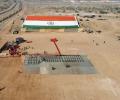
'If you want to change everything all of a sudden to polyester, then the production of khadi flags will come under trouble.'

The proposed amendments to the Consumer Protection (E-Commerce) Rules, 2020, that are envisioned to protect consumer interests, may further compound the impact of multiplicity of regulations on the e-commerce sector, the Indo-American Chamber of Commerce (IACC) had told the ministry of consumer affairs. IACC, the apex bilateral chamber for Indo-US business, had told the government that the proposed amendments would increase compliance liabilities that risk severely impairing the growth of the sector.

Believe it or not, the regulator is even stretching its arm to identify stressed borrowers and gauge the 'distance to default' as a measure of a particular bank's fragility, reveals Tamal Bandyopadhyay.
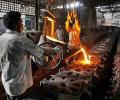
The central government is devising a mechanism to step up screening imports to protect domestic manufacturers. The details of the online monitoring system may find mention in the foreign trade policy 2021-26, which will kick in next month. The online system will make the data available to the government as well as industry about the countries from where the goods are being imported, and their quantity and quality. The data can help domestic producers analyse the market potential for such goods, said a senior government official. In the past 16 months, the government had implemented a steel- and coal-import monitoring system.
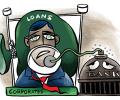
'We do not know when we will get to the business-as-usual mode.' 'Many borrowers may not be able to pay up.' 'The incidence of cheque bouncing has doubled or even trebled, some lenders say,' says Tamal Bandyopadhyay.

NCP spokesperson and Maharashtra minister Nawab Malik said that AICC general secretary H K Patil was told about this scheduled meeting when he and other Congress leaders met Pawar in Mumbai recently.

India is celebrating its 72nd Republic Day, the day its Constitution came into force in 1950.

The biggest loss of jobs among salaried employees was of 'white-collar professional employees and other employees'. Among these are engineers including software engineers, physicians, teachers, accountants, analysts and so on, who are professionally qualified and are employed in some private or government organisation All the gains made in their employment over the past four years were washed away during the lockdown, reveals Mahesh Vyas.

The meeting assumes significance as Swedish furniture retailer IKEA, which plans to invest Rs 10,500 crore (Rs 105 billion) to set up its own stores in India, had sought relaxation in certain conditions related to the mandatory 30 per cent sourcing from micro and small enterprises.
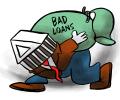
Banks' bad loans might cross Rs 10 lakh crore by the end of this fiscal, mainly on account of slippages in retail and MSME sectors, a study said on Tuesday. "NPAs are expected to rise to 8.5-9 per cent by March 2022, driven by slippages in retail, Micro, Small and Medium Enterprise (MSME) accounts, besides some restructured assets," the study by industry body Assocham and ratings firm Crisil said. The study titled 'Reinforcing the Code' said the Gross Non-Performing Assets (GNPAs) of banks are expected to cross Rs 10 lakh crore by March 2022.

The new jobs - created both directly and indirectly - will be across industries, including IT, skill development, content creation, retail, logistics, and manufacturing.

"Foreign Direct Investment (FDI) will bring along backward integration and investment in farm to fork. States like Karnataka, Andhra Pradesh, Tamil Nadu will be able to move produce more efficiently across the country", Confederation of Indian Industry (Southern Region) Chairman T T Ashok said in a statement.
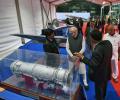
Defence Minister Rajnath Singh on Tuesday unveiled a new version of the procurement manual of the premier military research institute Defence Research and Development Organisation featuring simplified procedures for the involvement of the private sector in various research and development projects.

The scheme aims to enhance the capabilities and competitiveness of MSMEs, besides promoting the use consultancy services by entrepreneurs.

First-generation entrepreneurs of micro and small enterprises are facing the problem of inadequate credit flow. H P Kumar, chairman and managing director, National Small Industries Corporation, tells Business Standard about the recent initiatives taken by the corporation to tackle it.

Addressing the industry's concerns that banks were not lending to the MSME sector, he said credit flow to MSMEs had doubled from Rs 1,27,000 crore (Rs 1,270 billion) in 2006-07 to Rs 2,57,000 crore (Rs 2,570 billion) in 2008-09. In 2007-08, credit flow to the sector was Rs 2,13,000 crore (Rs 2,130 billion).
The finance ministry on Wednesday reimposed expenditure curbs on ministries and government departments for July-September quarter. There will be no spending restrictions on the ministries of health, rural development, agriculture, MSME (micro, small and medium enterprises) and railways as part of a two-pronged strategy. "The existing guidelines for expenditure control have been reviewed. "Keeping in view the evolving situation arising out of Covid-19 and anticipated cash position of the government, it is felt essential to regulate Quarterly Expenditure Plan (QEP)/Monthly Expenditure Plan (MEP) of specific ministries/departments for July-September, 2021," the Department of Economic Affairs in the finance ministry said in a notification.
 © 2026 Rediff.com - Advertise with us - Disclaimer - Privacy Policy - Sitemap - Feedback - About us - Terms of use - Grievances